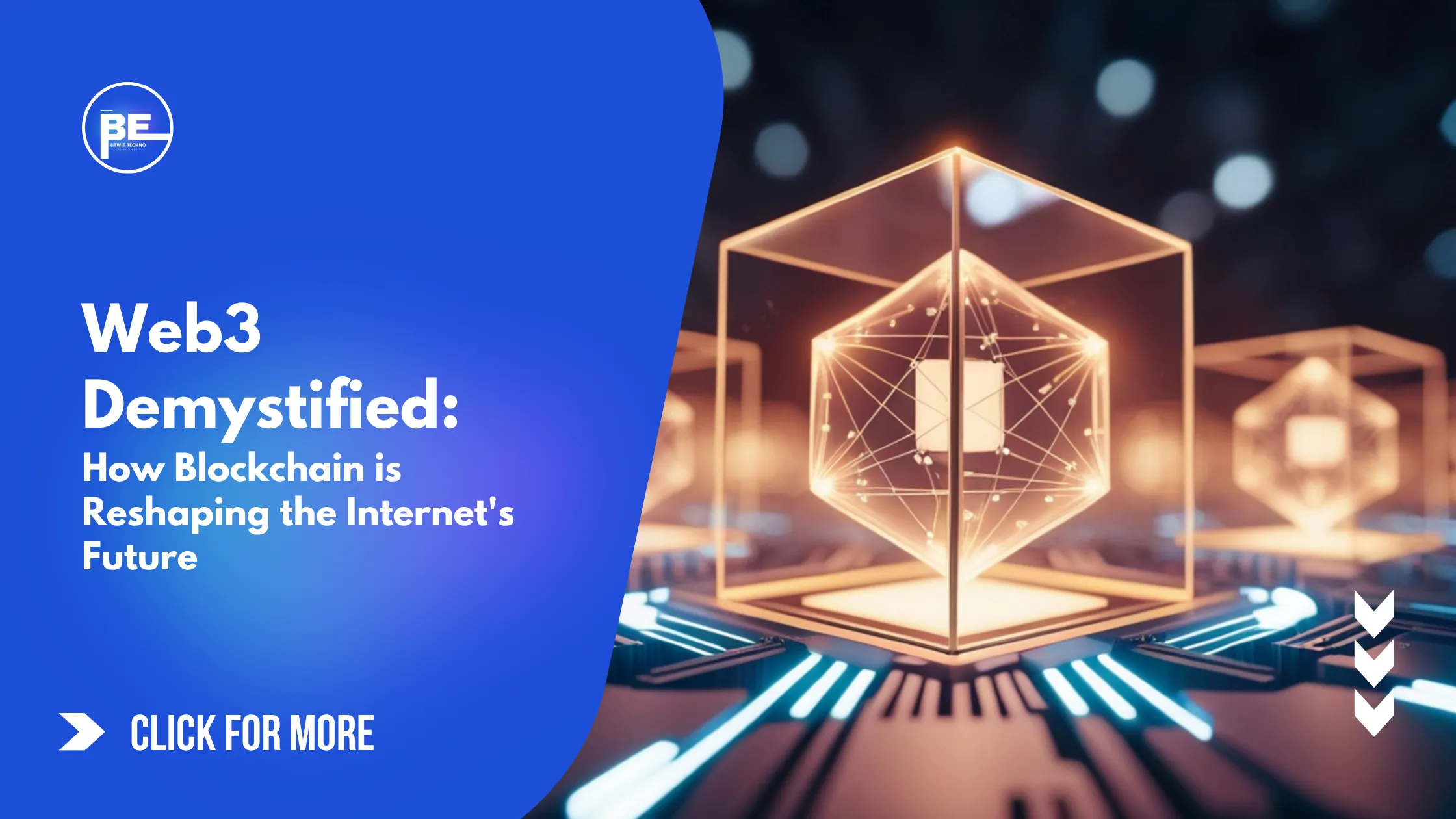
The internet is undergoing a fundamental transformation. From static web pages to interactive platforms and now toward decentralized ecosystems, each phase has redefined how users interact with digital systems.
Web3 represents the next evolution—an internet where users have greater control over their data, identity, and digital assets. At the core of this shift lies Blockchain, enabling trust, transparency, and decentralization.
1. What is Web3?
Web3 refers to a decentralized version of the internet built on blockchain technology. Unlike traditional web models controlled by centralized entities, Web3 distributes control across networks.
Key characteristics include:
- Decentralization of data and services
- User ownership of digital assets
- Trustless transactions without intermediaries
- Open and permissionless access
This paradigm shift empowers users rather than platforms.
2. Evolution: Web1 → Web2 → Web3
Understanding Web3 requires looking at the evolution of the internet:
- Web1 (Static Web): Read-only websites with limited interaction
- Web2 (Social Web): Interactive platforms dominated by centralized companies
- Web3 (Decentralized Web): User-owned, blockchain-powered ecosystems
Web3 aims to address the limitations of Web2, particularly around data privacy and platform control.
3. Role of Blockchain in Web3
Blockchain is the foundational technology behind Web3.
It enables:
- Secure, immutable record-keeping
- Transparent transactions
- Decentralized consensus mechanisms
By eliminating the need for central authorities, blockchain creates a trust-driven ecosystem.
4. Smart Contracts: Automating Trust
Smart Contracts are self-executing programs stored on a blockchain.
They automatically enforce agreements when predefined conditions are met.
Use cases include:
- Financial transactions
- Supply chain automation
- Digital agreements
- Tokenized assets
Smart contracts reduce reliance on intermediaries, increasing efficiency and reliability.
5. Decentralized Applications (dApps)
Web3 introduces Decentralized Applications (dApps), which operate on blockchain networks instead of centralized servers.
Benefits of dApps:
- Increased transparency
- Enhanced security
- Resistance to censorship
- Greater user control
dApps are being widely adopted in finance, gaming, social media, and more.
6. Digital Ownership and Token Economy
Web3 enables true digital ownership through tokens and blockchain-based assets.
This includes:
- Cryptocurrencies
- NFTs (Non-Fungible Tokens)
- Tokenized assets
Users can own, trade, and monetize their digital assets without relying on centralized platforms.
7. Decentralized Finance (DeFi)
Decentralized Finance (DeFi) is one of the most impactful Web3 applications.
It allows users to access financial services such as:
- Lending and borrowing
- Trading and investing
- Yield farming
All without traditional banks or intermediaries.
8. Challenges and Limitations
Despite its potential, Web3 faces several challenges:
- Scalability issues
- Regulatory uncertainty
- User experience complexity
- Security vulnerabilities (smart contract bugs)
Addressing these challenges is critical for mainstream adoption.
9. The Future of Web3
Web3 is still evolving, but its potential is immense.
Future developments may include:
- Improved scalability solutions (Layer 2 technologies)
- Greater enterprise adoption
- Enhanced user-friendly interfaces
- Integration with AI and IoT
Web3 is poised to redefine digital interactions and business models.
Conclusion
Web3 represents a shift toward a more open, transparent, and user-centric internet. By leveraging blockchain, smart contracts, and decentralized applications, it empowers individuals and reduces reliance on centralized systems.
Organizations that embrace Web3 early will be well-positioned to lead in the next era of digital innovation.
Call to Action
At Bitwit Techno – Educonnect, we help businesses explore and implement Web3 solutions—from blockchain integration to decentralized application development.
Ready to build the future of the internet? Let’s innovate together. 🚀