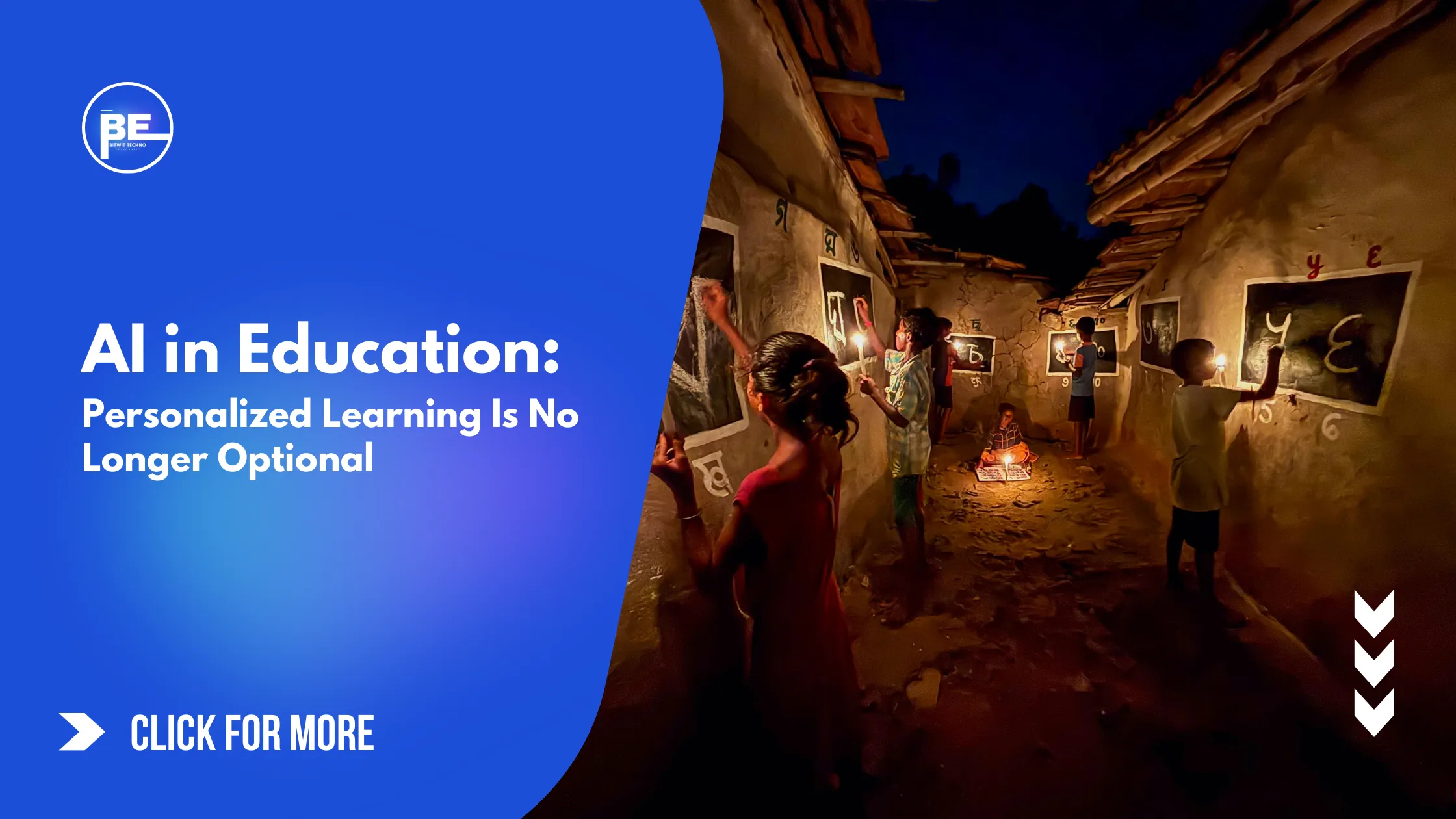
AI in Education: Personalized Learning Is No Longer Optional
For decades, education followed a one-size-fits-all model. The same syllabus, the same pace, the same assessments—regardless of how students learned or where they struggled.
That model no longer works.
Artificial Intelligence is fundamentally reshaping education by enabling personalized learning at scale, and institutions that fail to adapt risk becoming irrelevant in an increasingly digital-first world.
This shift is not experimental. It is inevitable.
1. The Limits of Traditional Education Models
Every classroom contains learners with different:
- Learning speeds
- Strengths and weaknesses
- Language preferences
- Attention spans and interests
Yet traditional systems treat them identically. The result is predictable—some students fall behind, others disengage, and educators struggle to bridge the gap.
Personalization was always the answer. Until now, it simply wasn’t scalable.
2. How AI Enables True Personalized Learning
AI changes the equation by continuously analyzing how learners interact with content and adjusting instruction in real time.
Key capabilities include:
- Adaptive lesson paths based on performance
- Customized assessments and practice exercises
- Real-time feedback and learning recommendations
- Intelligent tutoring support beyond classroom hours
Instead of forcing students to adapt to the system, AI enables the system to adapt to students.
3. Benefits for Students, Educators, and Institutions
Personalized learning powered by AI delivers measurable value across the ecosystem.
For students:
- Improved comprehension and retention
- Learning at an individualized pace
- Higher engagement and motivation
For educators:
- Reduced administrative workload
- Data-driven insights into student progress
- More time for mentoring and instruction
For institutions:
- Better academic outcomes
- Scalable learning delivery
- Competitive differentiation in the education market
4. AI Is a Support System, Not a Replacement for Teachers
A common misconception is that AI will replace educators. In reality, AI enhances the teacher’s role.
AI handles:
- Content recommendations
- Progress tracking
- Early identification of learning gaps
Teachers remain responsible for:
- Critical thinking development
- Emotional intelligence
- Contextual guidance and inspiration
The future of education is teacher-led, AI-supported.
5. Data, Ethics, and Trust Matter More Than Technology
Personalized learning relies on data—student performance, behavior, and preferences. This creates new responsibilities.
Education leaders must prioritize:
- Data privacy and security
- Bias-free and transparent algorithms
- Ethical use of student information
- Clear consent and governance policies
Trust is the foundation of successful AI adoption in education.
6. Why Personalized Learning Is No Longer Optional
Students today are digital natives. They expect learning experiences that are:
- Interactive
- Relevant
- Flexible
- Outcome-driven
Institutions that ignore personalization risk:
- Higher dropout rates
- Lower student satisfaction
- Reduced long-term relevance
AI-powered personalized learning is no longer a competitive advantage—it is a baseline expectation.
Conclusion
AI is not transforming education by replacing teachers or classrooms. It is transforming education by making learning human again—personal, adaptive, and inclusive.
Institutions that embrace personalized learning will shape the future of education. Those that don’t will struggle to keep up.
The question is no longer if AI should be used in education.
It is how quickly leaders are willing to act.